Client
Sisi Museum / Schönbrunn Group
Year
2025
Category
AR
Dine with Sisi
How vrisch turned a closed exhibition room into one of the museum's most engaging experiences
When the imperial dining room of the Sisi Museum in Vienna temporarily closed for restoration, the museum faced a familiar institutional challenge: how do you maintain the integrity of a carefully designed visitor journey when a key room is inaccessible?
The answer wasn't a sign on the door. It was an AR installation that went on to engage up to 75% of daily visitors and reach guests from 87 countries.
The Challenge
The imperial dining room is one of the Sisi Museum's most evocative spaces. Designed to reflect the atmosphere of courtly dinners during the time of Empress Elisabeth and Emperor Franz Joseph, it sits at the heart of the exhibition's narrative. With the room undergoing active restoration, the museum needed a solution that would preserve the visitor experience, respect the professionals working behind the curtain, and avoid turning a moment of institutional vulnerability into a disappointment.
They came to vrisch with a tight brief and a 2.5-week window to deliver.
"During renovation works at the Sisi Museum, we encounter unexpected situations — but these also become opportunities. We used interactive technology to enhance the visitor experience. Augmented Reality was the right choice because it's interactive and allows us to reach our visitors on an emotional level."— Sheila Bsteh, Sisi Museum
The Concept
Rather than working around the restoration curtain, vrisch made it the centerpiece of the experience.
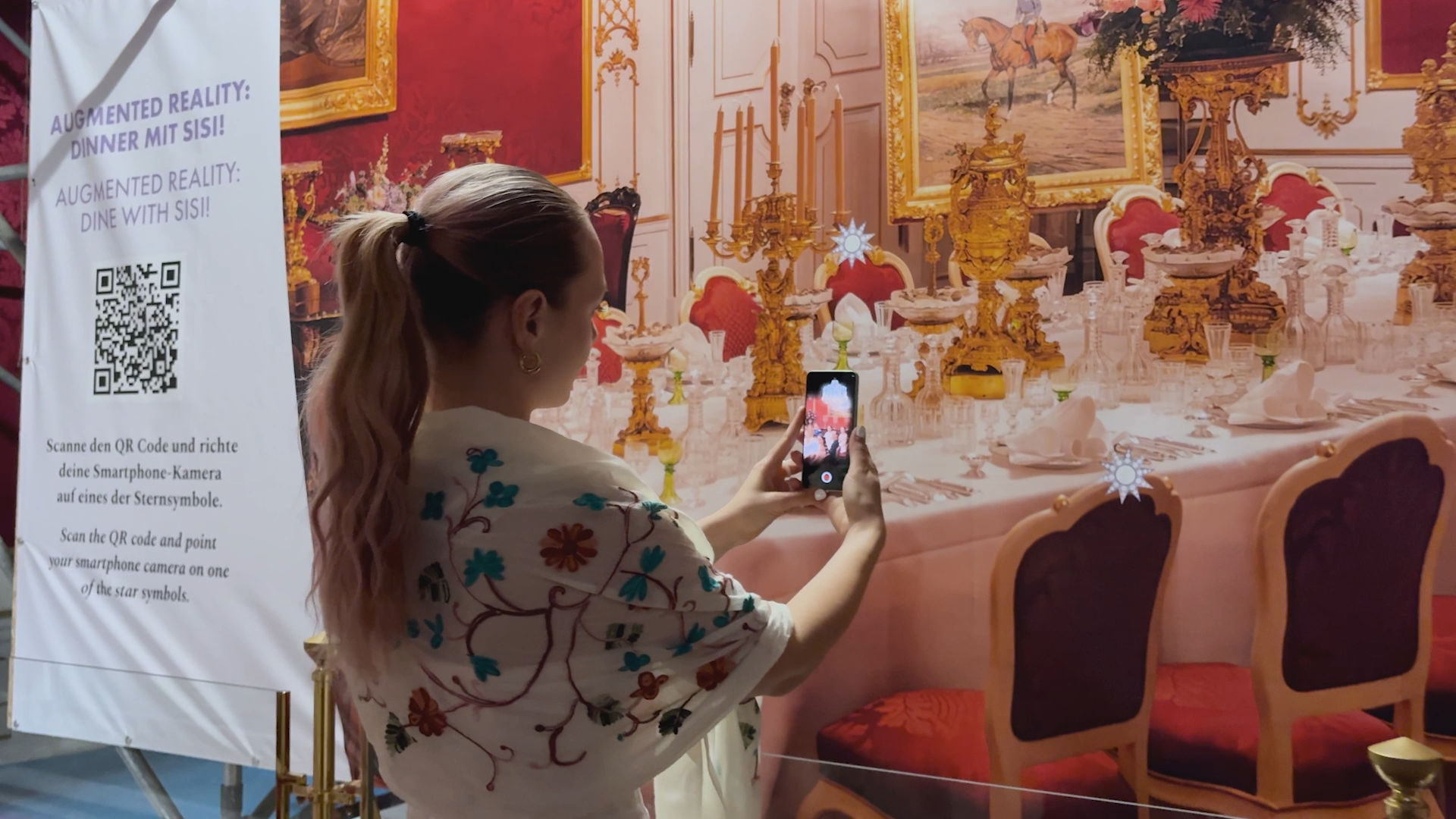
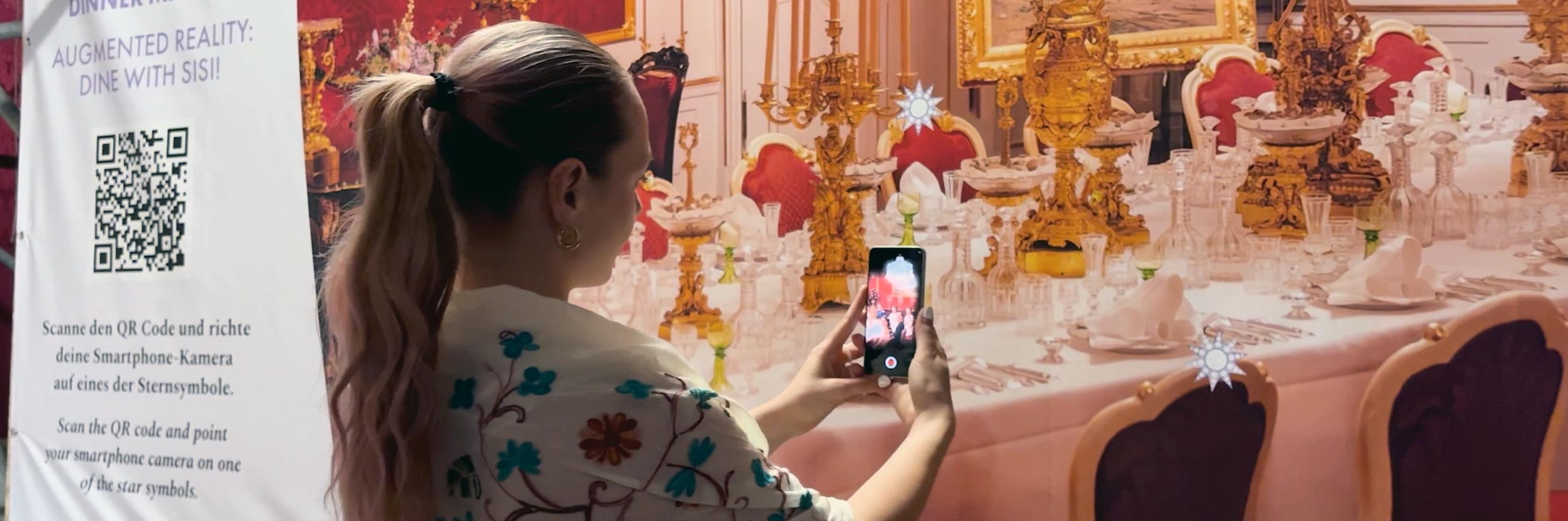
A printed banner covered the entrance to the dining room. Visitors were invited to scan a QR code on the banner and search for one of Sisi's iconic hair stars within the visual design. Once they pointed their phone at that star, the AR scene began — no app download required.
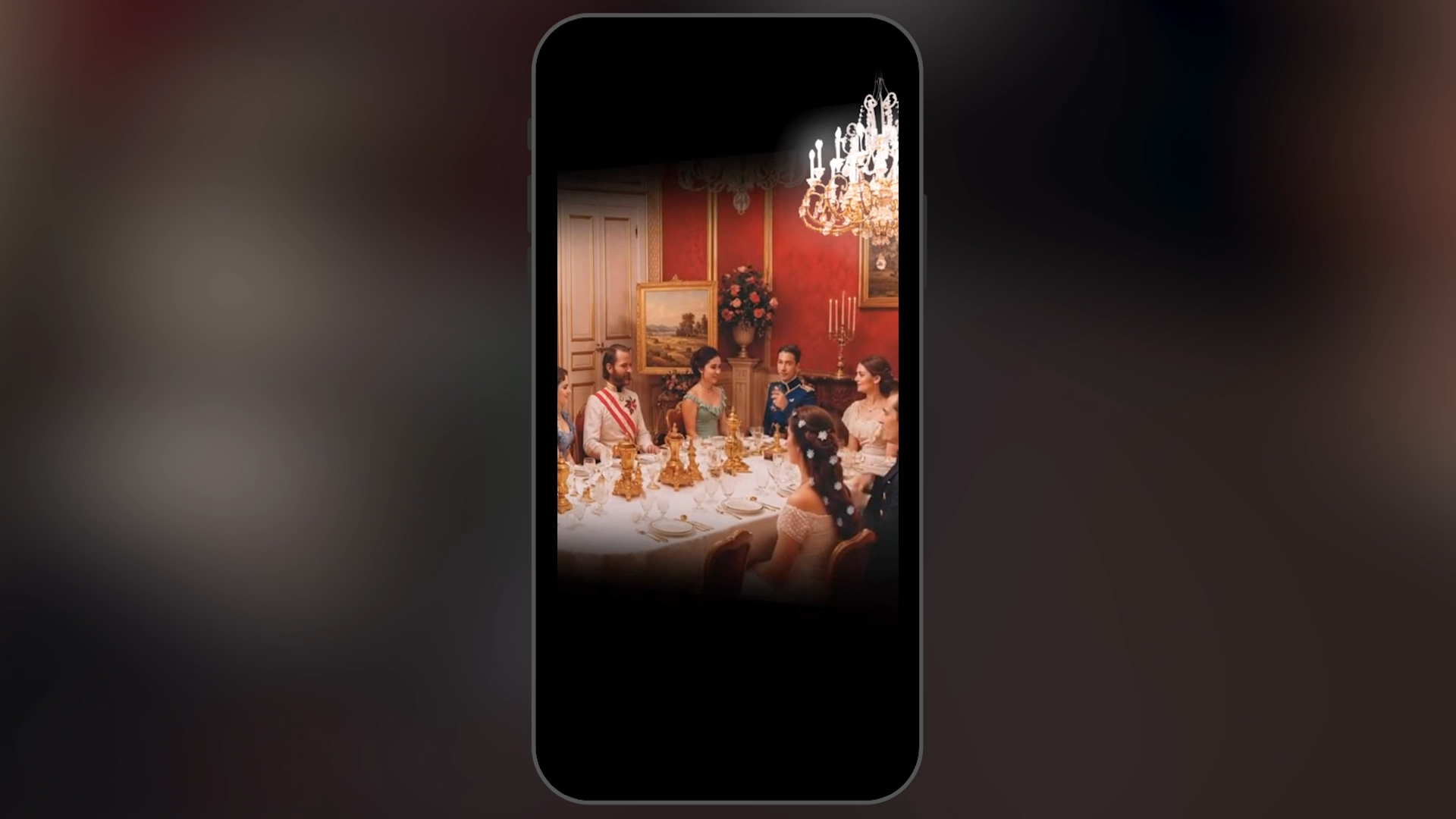
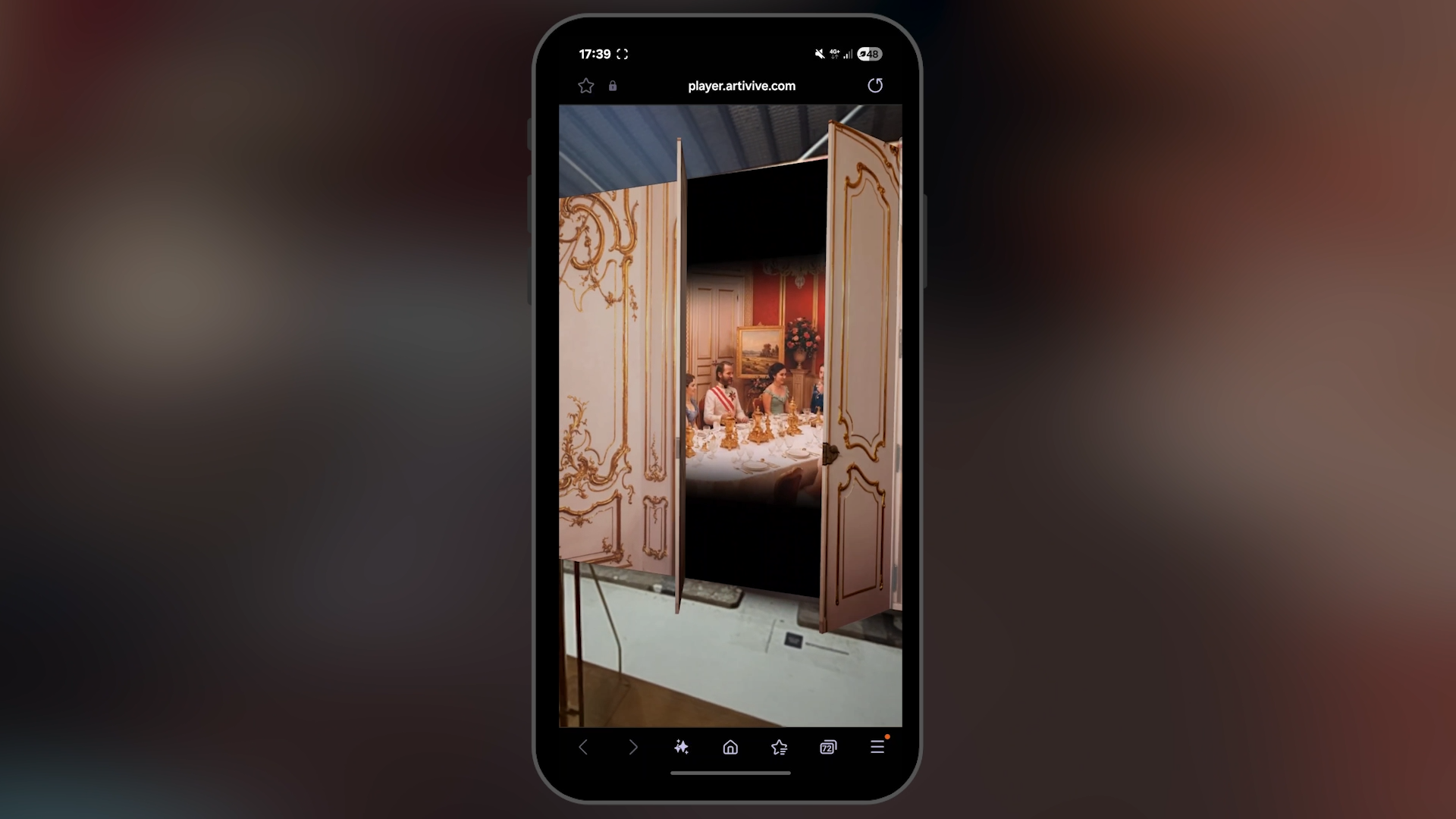
The imperial dining room doors appeared before them and slowly opened to reveal Sisi, Franz Joseph, and their guests seated at dinner. After a moment, the figures glanced toward the visitor and smiled — a small but deliberate gesture of acknowledgment — before returning to their meal.
The interaction lasted around 10 seconds. But those 10 seconds required months of thinking, research, and craft to get right.
Research, Accuracy, and the Work Behind the Experience
Nothing you see in this experience came out of the box. It wasn't the press of a button.
vrisch collaborated with Austrian multimedia artist Stephanie Meisl (s.myselle) to create and animate the dining scene using generative AI. But before a single frame was generated, the team invested deeply in research — because historical plausibility wasn't optional. It was the brief.
"This project was very special, particularly because of this aspect — we worked side by side with historians for every single detail that you see in this composition, to be as historically accurate as possible."— Gabriella Chihan Stanley, vrisch
That research included:
Working directly with historians from the Sisi Museum to ensure every gesture, expression, and detail aligned with the historical record
Collaborating with institutions such as the Wien Museum to train the AI model on official archival material, enabling the creation of historically grounded depictions of the imperial figures
Studying the imperial ways of living and rituals of the era — from table settings to dining etiquette — to reconstruct the atmosphere with accuracy and care
The technical process was equally rigorous. The team tested multiple AI tools to identify the best fit for this specific use case, and spent considerable time polishing the final result by hand — frame by frame, detail by detail. Each revision had to preserve approved elements while maintaining consistency across lighting, expression, and period-accurate detail.
It was the talent of creative technologists and joint research with museums that made a historically accurate and emotionally meaningful experience possible. All of it, for 10 seconds of experience.
Technology
The experience was built on Artivive's webAR platform, allowing visitors to access the AR scene directly in their browser via QR code. In a high-traffic museum environment, the absence of an app download was critical — onboarding needed to be immediate and intuitive for visitors of all ages and technical comfort levels.
Artivive's platform also allowed the team to combine static assets, video, and animation into a single cohesive scene with minimal technical overhead — essential given the compressed production timeline.
Results
Between May and July 2025, the installation recorded exceptional engagement:
~50,000 views
Visitors from 87 countries
50% average daily visitor engagement
Up to 75% on peak days
If you've worked with museums, you know the challenge of getting visitors to genuinely engage with digital, location-based experiences. These numbers tell you something real happened here.
A 50% average engagement rate — in a setting where visitors are moving through a curated sequence of rooms with limited dwell time — is a significant indicator of both accessibility and emotional pull. The experience didn't require visitors to seek it out. It met them exactly where they were.
The client received a high-quality, research-led generative AI success case. And we were happier than a two-tailed dog for it.
What This Project Demonstrates
Dine with Sisi wasn't designed as a flagship activation. It was designed to solve a specific institutional problem, respectfully and quickly. That constraint became its strength.
The project shows what's possible when AR is used not as spectacle, but as a thoughtful tool for cultural continuity — maintaining narrative flow, supporting operational needs, and giving visitors something genuinely memorable in a moment that could easily have been a dead end.
For cultural institutions navigating periods of change — whether renovation, expansion, or temporary inaccessibility — immersive technology offers a way to hold the visitor relationship intact, and sometimes deepen it.
Partners
Client: Schönbrunn Group / Sisi Museum
Production: vrisch — Gabriella Chihan Stanley, Axel Dietrich
AI Art: Stephanie Meisl (s.myselle)
Platform: Artivive
Inspired?
Let’s talk about your project!